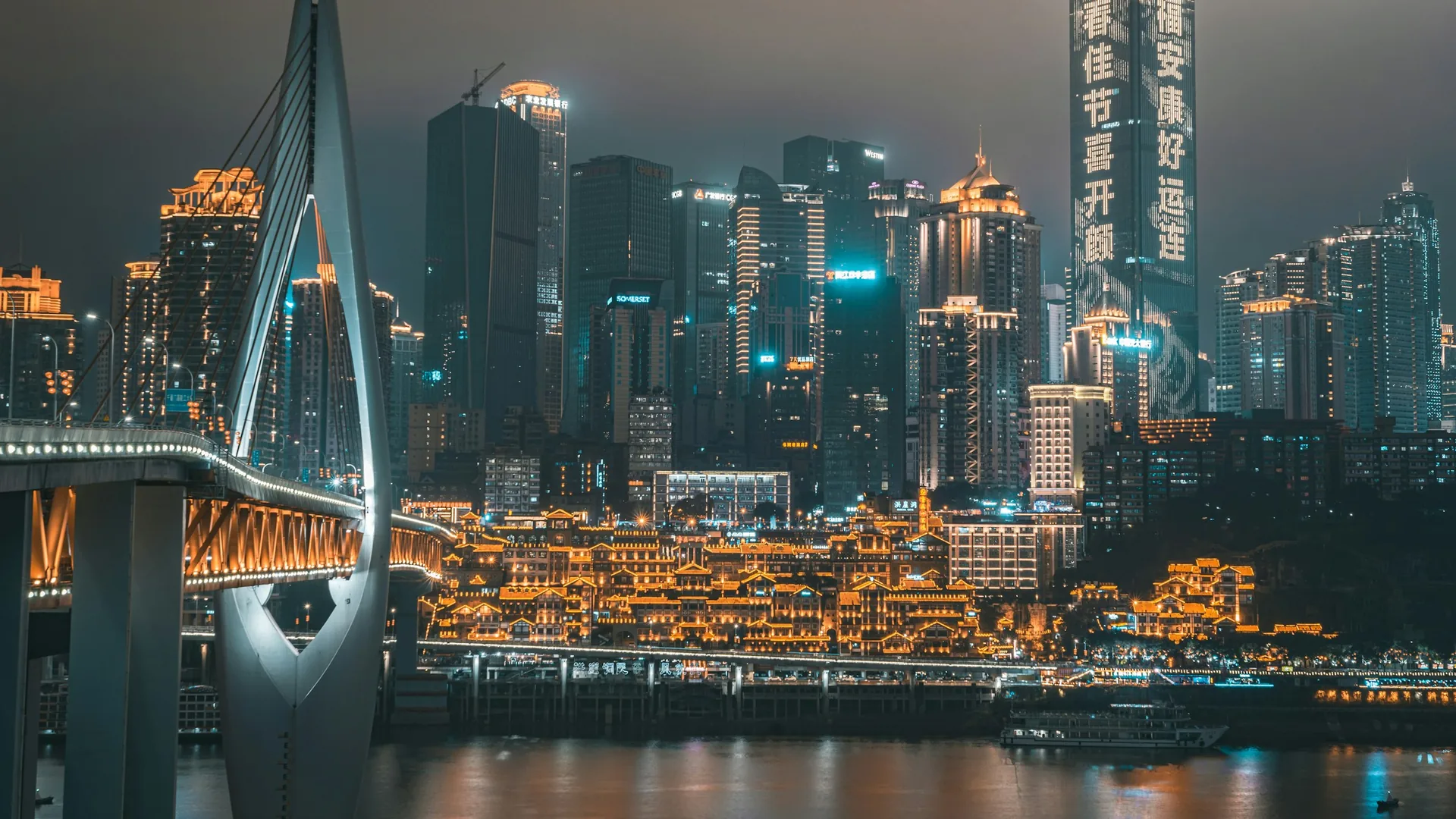
Travel Guide
China - Chongqing
A vertical megacity of rivers, ridgelines, and relentless ma-la heat found nowhere else in China.
Chongqing Travel Guide 2026
A comprehensive travel guide to Chongqing developed with input from residents who know this vertical megacity's layered terrain intimately. Covering multi-day routes through the Yuzhong Peninsula and beyond, navigating a transit system where monorails pass through apartment buildings, finding the best nine-grid hotpot and fiery xiaomian, and choosing accommodation that accounts for the city's extreme topography, this guide gives you the local knowledge needed to make sense of a place where ground level is always relative. Includes practical transport connections from Jiangbei Airport, district-by-district lodging recommendations, and detailed food guidance that goes far beyond just handling the heat.
Table of Contents
- I. Overview
- II. Recommended Routes
- III. Featured Dishes
- IV. Entry
- V. Transportation
- VI. Emergency Call Numbers
- VII. Departure
- VIII. Accommodation Recommendations
- IX. Essential Survival Phrases
- X. Packing List
I. Overview
Built where the Jialing River meets the Yangtze, Chongqing is a vertical city unlike anywhere else in China — or the world. Skyscrapers sprout from mountain ridges, elevated highways thread between apartment blocks at the 15th floor, and pedestrians navigate a topography so extreme that "ground level" is a relative concept. This was China's wartime capital during WWII, a treaty port that opened to foreign trade in 1891, and today it's a municipality of over 32 million people with a fiercely independent food culture built on numbing Sichuan peppercorn and incendiary chili. For international travelers, Chongqing offers something genuinely different from Beijing or Shanghai: raw, chaotic, unapologetically spicy energy — a megacity that feels like it was designed by M.C. Escher and seasoned by a madman.
🌤️ Best Time to Visit
- Autumn (late September–November) is the most comfortable season, with temperatures between 12°C–24°C (54°F–75°F), lower humidity, and the famous river fog that gives the city its "Fog Capital" (雾都) nickname adding atmospheric beauty without oppressive heat. October has moderate rainfall (~8 days), so pack a light rain jacket.
- Spring (March–April) offers mild temperatures (14°C–22°C / 57°F–72°F) and blooming scenery, though rainfall is moderate (9–11 days per month) — expect drizzly days mixed with pleasant ones.
- Winter (December–February) is grey and damp but rarely freezing, and this is when hotpot culture truly comes alive. Crowds are minimal and prices drop.
Periods to avoid:
- July–August: Chongqing is one of China's "Three Furnaces" (三大火炉). Temperatures regularly exceed 38°C (100°F) with suffocating humidity. The city becomes genuinely unpleasant for sightseeing.
- October 1–7 (Golden Week): Hongya Cave, Ciqikou, and the Yangtze River Cableway become nightmarishly crowded. If you must visit, go early morning or late evening.
- Chinese New Year (late January/early February): Many small restaurants and shops close for 1–2 weeks. Major attractions stay open but are packed with domestic tourists.
🌡️ Climate Table
| Month | High / Low (°C) | Rain |
|---|---|---|
| January | 10° / 5° | 6 days |
| February | 12° / 7° | 5 days |
| March | 17° / 10° | 9 days |
| April | 22° / 15° | 11 days |
| May | 27° / 19° | 13 days |
| June | 30° / 22° | 14 days |
| July | 34° / 25° | 12 days |
| August | 35° / 25° | 11 days |
| September | 28° / 21° | 12 days |
| October | 21° / 16° | 8 days |
| November | 16° / 11° | 7 days |
| December | 11° / 6° | 5 days |
Note: Chongqing's humidity makes temperatures feel more extreme than the numbers suggest. A 34°C day at 80%+ humidity is punishing. Conversely, winter's 10°C with damp air penetrates clothing in a way dry-cold cities don't. There is no central heating in Chongqing — dress warmly indoors in winter.
🗣️ English Levels
Honest assessment: Very limited. Chongqing sees far fewer international tourists than Beijing, Shanghai, or even Chengdu. Outside of five-star hotels and the occasional international hostel, English is rarely spoken or understood. Even in major tourist sites like Hongya Cave (洪崖洞) or Jiefangbei (解放碑), signage may be bilingual but staff typically cannot converse in English.
...